

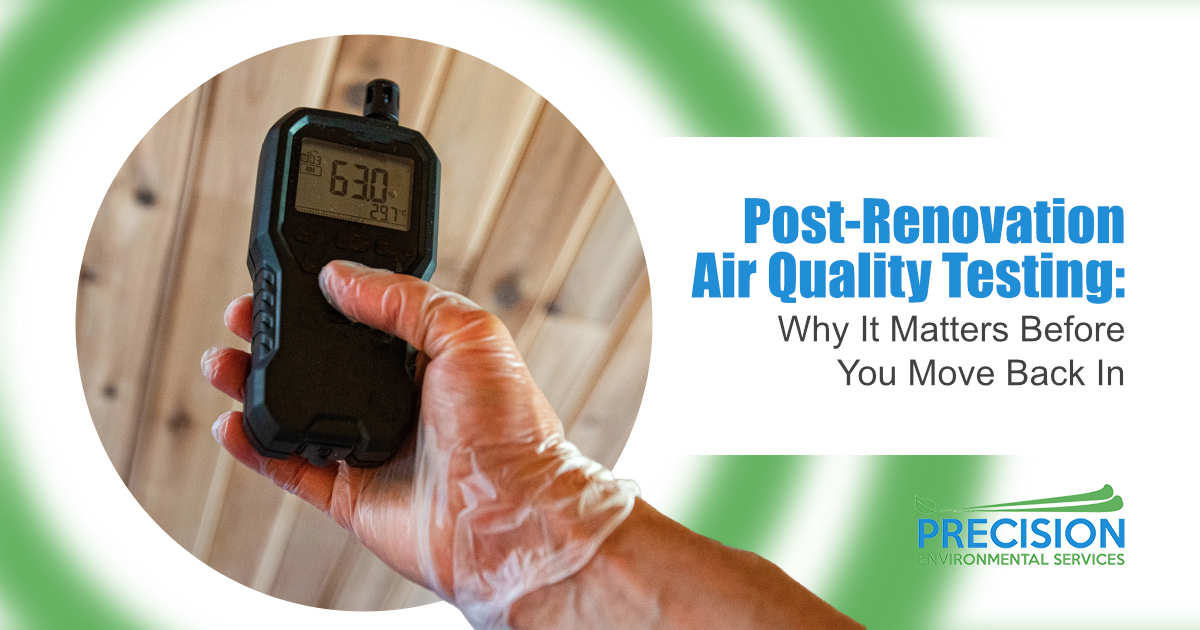
Completing a renovation or construction project is often an exciting milestone for homeowners, property managers, and business owners. Fresh finishes, updated layouts, and modern building materials can transform a space and improve its functionality. However, construction completion does not always mean indoor environmental conditions are ready for occupancy.
Many renovation projects introduce airborne contaminants that can remain present long after workers leave the site. New paints, adhesives, flooring materials, cabinets, and other building products may continue releasing compounds into the air during the weeks following installation. Dust and particulate matter generated during construction can also linger throughout the building if not properly addressed.
Post-renovation indoor air quality testing provides valuable information about the environmental conditions within a newly completed space. By identifying potential contaminants before occupants return, testing supports informed decisions regarding occupancy readiness and indoor environmental quality. This proactive approach can help determine whether additional ventilation, cleaning, or corrective measures are necessary before reoccupancy.
Renovation Projects Can Affect Indoor Air Quality Long After Construction Ends
Construction and remodeling activities frequently introduce materials that influence indoor air quality beyond the completion date of the project. Many building products release chemical compounds as part of a natural process known as off-gassing. These emissions may continue for days, weeks, or even months, depending on the materials used.
New construction air quality concerns are not always obvious to building occupants. Some contaminants are odorless, while others may only be noticeable under specific conditions. As a result, air quality issues can remain undetected until after people move back into the space.
Building materials play a significant role in indoor environmental quality. Flooring systems, paints, sealants, insulation products, engineered wood materials, and furnishings may all contribute to airborne contaminant levels. Evaluating indoor conditions after construction provides objective information about the environment occupants will experience.
Post-renovation indoor air quality testing helps identify environmental factors that may otherwise go unnoticed. Rather than relying solely on visual inspections, testing measures conditions that cannot be seen with the naked eye. This allows property owners and facility managers to make informed decisions based on measurable data.
Common Air Pollutants Found After Renovation and Construction Projects
Volatile Organic Compounds (VOCs)
Volatile organic compounds, commonly known as VOCs, are among the most frequently discussed post-construction air contaminants. These compounds are released from a variety of products used during renovation and remodeling projects. Paints, coatings, adhesives, flooring materials, sealants, and cabinet finishes are all common sources of VOC emissions.
Construction off-gassing occurs as newly installed materials release chemical compounds into the surrounding air. While emissions often decrease over time, elevated levels may be present during the period immediately following construction. The extent and duration of off-gassing can vary depending on product type, ventilation conditions, and environmental factors.
VOCs after renovation may contribute to indoor air quality concerns if concentrations become elevated. Because these compounds originate from multiple sources, identifying their presence often requires professional sampling and laboratory analysis. Testing helps determine whether emissions remain significant after construction activities have concluded.
Formaldehyde from New Building Materials
Formaldehyde is a specific chemical compound commonly associated with certain construction and furnishing materials. Engineered wood products, composite materials, cabinetry, furniture, and some flooring products may contain formaldehyde-based resins. New installations can contribute to elevated indoor concentrations during the post-construction period.
Formaldehyde in new construction environments is often linked to recently manufactured materials rather than construction activities themselves. As products age, emissions generally decline over time. However, newly renovated spaces may experience higher concentrations during the initial occupancy period.
Because formaldehyde is a recognized indoor air contaminant, it is frequently included in professional indoor air quality evaluations. Testing provides objective measurements that help determine whether concentrations warrant further investigation or corrective action. This information supports informed decisions regarding occupancy readiness.
Construction Dust and Fine Particulates
Dust generated during renovation projects can remain present long after visible cleanup has been completed. Drywall dust, wood particles, concrete dust, insulation fibers, and other construction-related materials may accumulate throughout the building. Fine particles can settle on surfaces, enter ventilation systems, or remain suspended in the air.
Renovation dust exposure concerns are not always limited to active construction periods. Disturbance of settled dust through normal building activities may reintroduce particles into occupied areas. This can make post-construction evaluation an important step before occupants return.
HVAC systems can also play a role in distributing particulate matter throughout a building. Dust that enters ductwork may continue circulating if filtration and cleaning measures are insufficient. Air quality assessments can help identify particulate-related concerns that remain after project completion.
Why Waiting for Symptoms Is the Wrong Approach
Many indoor air quality concerns are investigated only after occupants begin reporting discomfort or environmental complaints. By that point, individuals may have already spent days or weeks inside the building. Addressing concerns reactively can create unnecessary delays and uncertainty.
Not all indoor contaminants produce noticeable odors or visible signs. A space may appear clean and complete while elevated levels of certain airborne compounds remain present. Relying solely on perception may not provide an accurate understanding of indoor environmental conditions.
Professional testing offers a proactive alternative to waiting for complaints or concerns to emerge. Objective measurements help evaluate air quality before occupancy begins. This allows building owners and managers to identify potential issues earlier in the process.
Pre-occupancy testing can be especially valuable in newly renovated commercial environments. Businesses often face scheduling pressures and operational demands that make unexpected delays difficult to manage. Evaluating conditions before reopening helps support smoother transitions back into the space.
What Professional Post-Renovation Indoor Air Quality Testing Measures
VOC and TVOC Testing
One of the primary goals of post-construction air testing is to evaluate the presence of volatile organic compounds. Individual VOCs may originate from numerous construction materials, furnishings, and finishes. Laboratory analysis can help identify specific compounds and determine overall concentrations.
Total volatile organic compounds, often referred to as TVOCs, provide a broader assessment of airborne chemical emissions. TVOC measurements can help evaluate the combined impact of multiple emission sources within a building. This information is often useful when assessing construction off-gassing and occupancy readiness.
Professional sampling procedures provide more reliable information than assumptions based on odor or product specifications alone. Conditions within each building can vary significantly depending on material selection, ventilation, and environmental factors. Testing offers site-specific data that supports informed decision making.
Airborne Particulate Evaluation
Particulate assessments focus on the presence and concentration of airborne dust and other fine particles. Construction-related contaminants can remain present despite standard cleanup procedures. Measuring particulate levels helps determine whether additional cleaning or filtration efforts may be beneficial.
Air sampling methods can identify particle-related concerns that are not immediately visible. Fine particles may remain suspended in indoor environments even when surfaces appear clean. Evaluating airborne conditions provides a more complete picture of indoor environmental quality.
Particulate testing may be particularly relevant following extensive demolition, drywall installation, flooring replacement, or large-scale remodeling projects. These activities often generate significant amounts of airborne dust. Assessments help determine whether construction-related pollutants remain present after project completion.
Ventilation Performance Assessment
Ventilation plays an important role in managing indoor air quality after renovation and construction activities. Effective air exchange helps dilute airborne contaminants and supports the removal of emissions generated by building materials. Poor ventilation can contribute to the accumulation of pollutants indoors.
Post-construction evaluations may include consideration of ventilation effectiveness and overall airflow conditions. Understanding how air moves through the building helps provide context for other testing results. This information can support recommendations aimed at improving indoor environmental quality.
Ventilation assessments are particularly valuable when addressing construction off-gassing concerns. Increasing fresh air exchange may help reduce concentrations of certain airborne compounds over time. Evaluating system performance helps determine whether ventilation is adequately supporting occupancy readiness.
Source control measures such as selecting low-emission materials, replacing HVAC filters, and performing detailed post-construction cleaning may help reduce airborne contaminants. These strategies are often used alongside ventilation improvements to support indoor environmental quality. Testing can help evaluate whether these measures have effectively addressed construction-related pollutants.
How Testing Results Help Determine Whether a Space Is Ready for Occupancy
Post-renovation indoor air quality testing provides objective environmental data that can guide decision making. Results help identify whether elevated contaminant levels are present within the building. This information allows stakeholders to better understand current indoor conditions.
Testing can also evaluate the effectiveness of ventilation strategies and post-construction cleaning efforts. If elevated levels are identified, corrective measures may be implemented before occupants return. Follow-up assessments may then be used to verify improvements.
IAQ testing after remodel projects supports data-driven occupancy planning rather than assumptions. Property owners, facility managers, and project teams can use results to determine whether additional actions are warranted. This approach helps reduce uncertainty during the transition back into the space.
Applications for Residential and Commercial Projects
Residential Renovations
Residential remodeling projects frequently involve products that influence indoor air quality. Kitchen renovations, bathroom remodels, flooring replacements, cabinetry upgrades, and whole-home renovations may all introduce new sources of airborne contaminants. Evaluating conditions after construction provides valuable information before residents move back in.
Homeowners often focus on appearance and functionality when completing renovation projects. Indoor environmental quality can be overlooked despite its importance to overall occupancy readiness. Post-construction testing helps provide a clearer understanding of conditions within the home.
Commercial Construction and Tenant Improvements
Commercial projects present many of the same air quality considerations found in residential renovations. Office buildouts, healthcare facilities, schools, retail spaces, and tenant improvement projects often involve extensive use of new construction materials. These materials may contribute to post-construction emissions and particulate concerns.
Indoor environmental quality can be an important consideration before employees, customers, patients, or visitors return to a building. Evaluating conditions before occupancy supports informed facility management decisions. This proactive approach may help identify concerns before they affect building operations.
Taking a Proactive Approach to Indoor Air Quality After Construction
Construction projects can introduce a variety of airborne contaminants that are not always visible or immediately noticeable. VOCs, formaldehyde, construction dust, and other pollutants may remain present after renovation work has been completed. Understanding these conditions requires more than a visual inspection alone.
Professional indoor air quality testing services can help evaluate environmental conditions following renovation, remodeling, or new construction projects. Testing provides objective information regarding contaminant levels, ventilation effectiveness, and occupancy readiness. This data supports informed decisions about when a space may be appropriate for occupancy evaluation.
Protect Indoor Air Quality Before Reoccupying a Renovated Space
Indoor environmental conditions can play an important role in the success of any renovation or construction project. Evaluating air quality before occupants return helps identify potential concerns while corrective actions are still easier to implement. A proactive assessment provides valuable insight into the conditions occupants may experience when they move back into the space.
Post-renovation indoor air quality testing serves as an important step in understanding the impact of construction materials, off-gassing, and airborne contaminants. By measuring environmental conditions before occupancy begins, property owners and facility managers gain reliable information that supports confident decision-making. Whether for a residential remodel or a commercial buildout, professional testing provides a practical way to assess indoor air quality before reoccupying a newly renovated space.