

Environmental due diligence plays an important role in commercial real estate transactions, redevelopment projects, and property acquisitions. Buyers, lenders, developers, and municipalities often rely on environmental assessments to better understand potential risks associated with a property. When a Phase I Environmental Site Assessment identifies potential concerns, a Phase II environmental site assessment may be the next step.
A Phase II environmental site assessment is designed to investigate whether environmental contamination is present on a property. Unlike a Phase I assessment, which relies on records reviews and site observations, a Phase II assessment involves collecting and analyzing environmental samples. Understanding what triggers this investigation and what occurs during the process can help stakeholders make informed decisions during commercial property transactions.
What Is a Phase II Environmental Site Assessment?
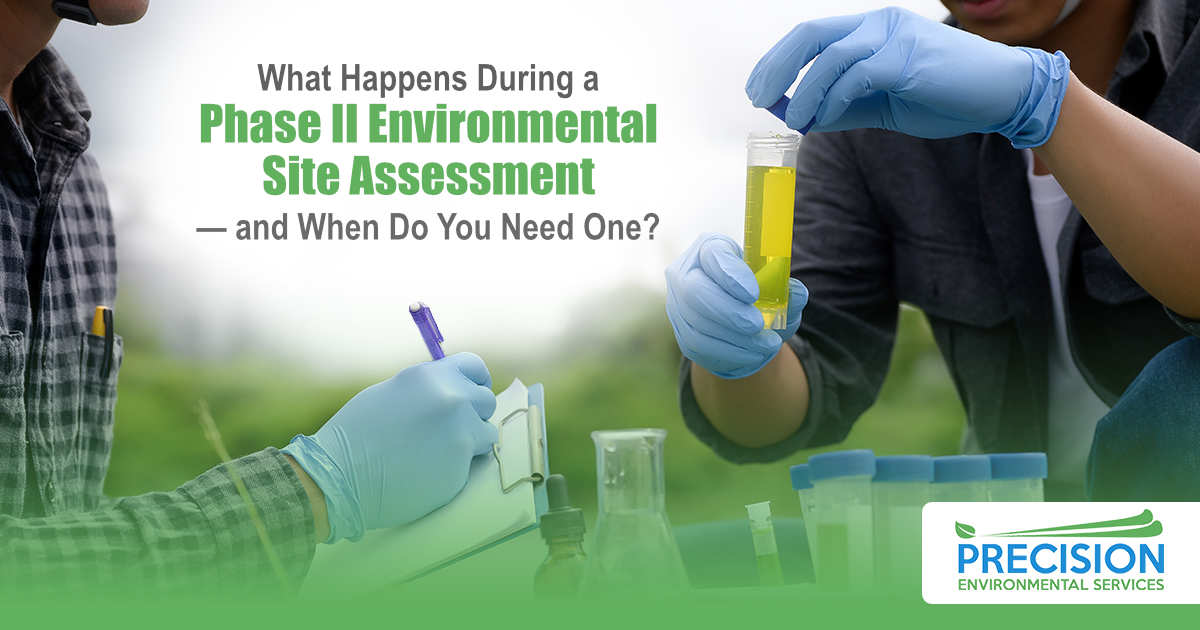
A Phase II environmental site assessment is a scientific investigation conducted to evaluate the presence and extent of potential environmental contamination. The assessment is typically performed when a Phase I Environmental Site Assessment identifies a recognized environmental condition (REC) or another concern that warrants additional evaluation. Its purpose is to gather objective data that can help determine whether environmental impacts exist.
The investigation generally focuses on environmental media such as soil, groundwater, soil vapor, or other materials that may have been affected by historical property activities. Environmental professionals develop a site-specific sampling plan based on known or suspected sources of contamination. The information gathered helps property stakeholders better understand environmental risks associated with a site.
Many Phase II assessments are conducted using guidance provided by ASTM E1903, a widely recognized standard for environmental site investigations. The standard helps establish a consistent framework for planning, performing, and documenting environmental testing activities. While every property presents unique circumstances, ASTM E1903 helps ensure investigations follow established industry practices.
Why Would a Property Need a Phase II Assessment?
A Phase II environmental site assessment is not automatically required for every commercial property transaction. In many cases, a Phase I assessment identifies no significant concerns, allowing the transaction to move forward without further environmental investigation. A Phase II assessment is generally recommended only when potential environmental risks are identified.
Historical property uses often play a significant role in triggering a contaminated property investigation. Former industrial facilities, manufacturing sites, gas stations, automotive repair shops, dry-cleaning operations, and chemical storage areas may have a higher likelihood of environmental contamination. If records indicate these activities occurred on or near a property, additional investigation may be warranted.
Other triggers may include evidence of spills, abandoned underground storage tanks, stained soil, distressed vegetation, or regulatory records indicating past environmental incidents. Environmental consultants evaluate these findings during the Phase I process and determine whether further testing is appropriate. The goal is to reduce uncertainty before a property changes ownership or undergoes redevelopment.
When Is a Phase II Environmental Site Assessment Recommended?
A Phase II assessment is commonly recommended when a recognized environmental condition is identified during a Phase I Environmental Site Assessment. The Phase I process is designed to identify potential concerns, but it cannot confirm whether contamination is actually present. Environmental sampling and laboratory testing are often necessary to answer that question.
Commercial lenders may also request a Phase II assessment before approving financing for certain properties. Lenders seek to understand potential environmental liabilities that could affect property value or create future financial risks. Environmental due diligence helps support more informed lending decisions.
Developers frequently commission Phase II investigations when planning redevelopment projects. Understanding environmental conditions early in the planning process can help avoid costly surprises during construction. The assessment may also assist with project budgeting, regulatory compliance, and long-term site planning.
In Texas, Phase II environmental site assessments are frequently associated with redevelopment projects, former industrial properties, fuel-related facilities, and expanding commercial developments. As commercial growth continues across North Texas, environmental due diligence remains an important part of evaluating potential environmental liabilities before acquisition or redevelopment. Understanding site conditions early can help stakeholders make informed investment and planning decisions.
Phase I vs. Phase II Environmental Site Assessments
Although the two assessments are closely related, they serve different purposes within the environmental due diligence process. A Phase I Environmental Site Assessment focuses on identifying potential environmental concerns through records reviews, historical research, interviews, and site reconnaissance. No physical environmental sampling occurs during a Phase I investigation.
A Phase II environmental site assessment moves beyond identification and focuses on confirmation. Environmental professionals collect samples from the property and submit them for laboratory analysis. The results provide scientific data regarding the presence or absence of contamination.
In simple terms, a Phase I assessment asks whether there may be a problem, while a Phase II assessment seeks to determine whether a problem actually exists. Together, these assessments help buyers, lenders, developers, and municipalities make more informed decisions. Both play important roles in commercial real estate environmental assessment activities.
What Happens During a Phase II Environmental Site Assessment?
Every Phase II investigation is designed around site-specific concerns identified during the environmental due diligence process. The scope of work varies depending on property history, suspected contaminants, and the environmental conditions being evaluated. However, most assessments follow a similar sequence of planning, sampling, testing, and reporting.
Investigation Planning
The process begins with a detailed review of information gathered during the Phase I assessment. Environmental professionals identify potential sources of contamination and determine what environmental media should be sampled. Sampling objectives are developed to ensure the investigation addresses the specific concerns identified during due diligence.
A sampling plan is then created to establish testing locations and analytical requirements. The plan may identify areas where historical operations occurred or where contamination is most likely to be present. Careful planning helps maximize the effectiveness of the investigation while minimizing unnecessary testing.
Soil Sampling and Soil Borings
Soil sampling is one of the most common components of a Phase II environmental site assessment. Environmental professionals use drilling equipment to create soil borings at targeted locations throughout the property. Samples are collected at various depths to evaluate subsurface conditions.
The collected samples are analyzed for contaminants that may be associated with historical site activities. Depending on the property’s history, testing may focus on petroleum hydrocarbons, volatile organic compounds, solvents, heavy metals, pesticides, or industrial chemicals. Soil sampling helps determine whether contamination exists beneath the property surface.
The results can also provide insight into the extent and concentration of environmental impacts. Understanding these conditions is important when evaluating redevelopment potential, environmental liability, and future site management requirements. Soil data often serves as a key component of environmental decision-making.
Groundwater Testing
Groundwater testing may be necessary when there is concern that contaminants have migrated below the surface. Environmental professionals may install monitoring wells to access groundwater beneath the property. Samples are then collected and submitted for laboratory analysis.
Groundwater testing helps determine whether contamination has affected subsurface water resources. The results can indicate whether contaminants remain localized or have moved beyond the original source area. This information is particularly important for properties with historical industrial operations or chemical handling activities.
The findings may also help identify whether additional investigation is necessary. Understanding groundwater conditions provides a more complete picture of environmental risk and potential regulatory considerations. Groundwater testing is often a critical component of a comprehensive contaminated property investigation.
Laboratory Analysis
Samples collected during the investigation are sent to accredited laboratories for testing. Laboratories use established analytical methods to identify and quantify contaminants within the samples. Quality assurance procedures help ensure the reliability of the results.
Laboratory analysis provides the scientific data needed to evaluate environmental conditions. Results are compared against applicable regulatory standards and screening criteria. Environmental professionals then interpret the findings within the context of the property’s history and current use.
The analysis may reveal no significant contamination, limited environmental impacts, or conditions requiring further evaluation. Regardless of the outcome, laboratory testing provides objective information that supports informed decision-making. This data is often central to the environmental due diligence process.
Reporting and Findings
Once testing is complete, environmental professionals prepare a detailed report documenting the investigation. The report describes sampling methods, testing locations, laboratory results, and interpretations of environmental conditions. It also outlines any conclusions reached during the assessment.
The findings help stakeholders understand whether contamination is present and whether additional action may be necessary. Recommendations may include further investigation, risk evaluation, remediation planning, or no additional action. The report becomes an important resource for buyers, lenders, developers, and regulatory agencies.
A clear understanding of site conditions can reduce uncertainty during commercial property transactions. Environmental data provides a stronger foundation for negotiations, project planning, and risk management decisions. The final report serves as the primary deliverable of the Phase II assessment process.
Who Typically Needs a Phase II Environmental Site Assessment?
Commercial property buyers often rely on Phase II assessments when evaluating acquisition opportunities. Environmental liabilities can significantly affect property value, redevelopment potential, and long-term ownership costs. The assessment helps buyers better understand potential risks before completing a transaction.
Commercial lenders may require additional environmental investigation before approving financing. Environmental contamination can affect collateral value and create unforeseen financial exposure. A Phase II assessment helps lenders evaluate these risks more effectively.
Property developers frequently use environmental testing to support redevelopment planning. Understanding site conditions early can help guide design decisions, construction schedules, and project budgets. Environmental information also supports regulatory compliance and project feasibility assessments.
Municipalities and public agencies may conduct Phase II investigations before acquiring land or initiating redevelopment projects. Public-sector organizations often seek to understand environmental conditions before committing resources to a site. Environmental due diligence supports responsible planning and long-term community development.
What Happens if Contamination Is Found?
Discovering contamination does not necessarily mean a transaction cannot proceed. Many commercial property transactions successfully move forward after environmental impacts are identified and properly evaluated. The key is understanding the nature and extent of the environmental conditions involved.
In some situations, additional investigation may be recommended to further define contamination boundaries or evaluate potential risks. Environmental professionals may conduct supplemental sampling to gather more information about site conditions. These additional steps help stakeholders make informed decisions regarding future actions.
Remediation or risk management measures may also be considered when contamination is confirmed. The appropriate response depends on factors such as contaminant type, concentration, site use, and regulatory requirements. Environmental findings often become part of broader transaction negotiations and redevelopment planning discussions.
Understanding the Next Step After a Phase I Assessment
A Phase II environmental site assessment provides valuable information when environmental concerns are identified during the due diligence process. Through soil sampling, groundwater testing, laboratory analysis, and detailed reporting, the investigation helps determine whether contamination is present and what it may mean for the property. This information supports informed decision-making for buyers, lenders, developers, municipalities, and other stakeholders involved in commercial real estate transactions.
Need Environmental Due Diligence Support for a Commercial Property?
If a Phase I assessment has identified potential environmental concerns, understanding the next steps is critical before moving forward with a transaction. Property stakeholders seeking additional information about environmental site assessments can explore Precision Environmental Services’ Environmental Site Assessment resources. Commercial property stakeholders can use professional environmental due diligence services to better understand potential risks and support informed real estate decisions.